Robotics Field & Deployment Engineer · Boston, MA · M.S. Robotics, Northeastern, April 2027
Autonomy that has to survive contact with the real world.
I take robots from bench bring-up to open water and debug them where they fail: sensors, firmware, tethers, networks and the operator's console. Then I build the simulation that stops it happening twice.
Simulation · ArduCopter SITL in Isaac SimReal · Archelon ROV
8 thrustersROV taken from bench to open water
3 to 4open-water deployments, 10 to 15 pool sessions
2nd placeHackachusetts 2026, Robotics track
5 simulatorsIsaac Sim, Isaac Lab, MuJoCo, Gazebo, ArduPilot SITL
May 2027available, M.S. Robotics, Northeastern
01
Real hardware: the Archelon co-op
June to Sep 2026 · Boston, MA · my own footage
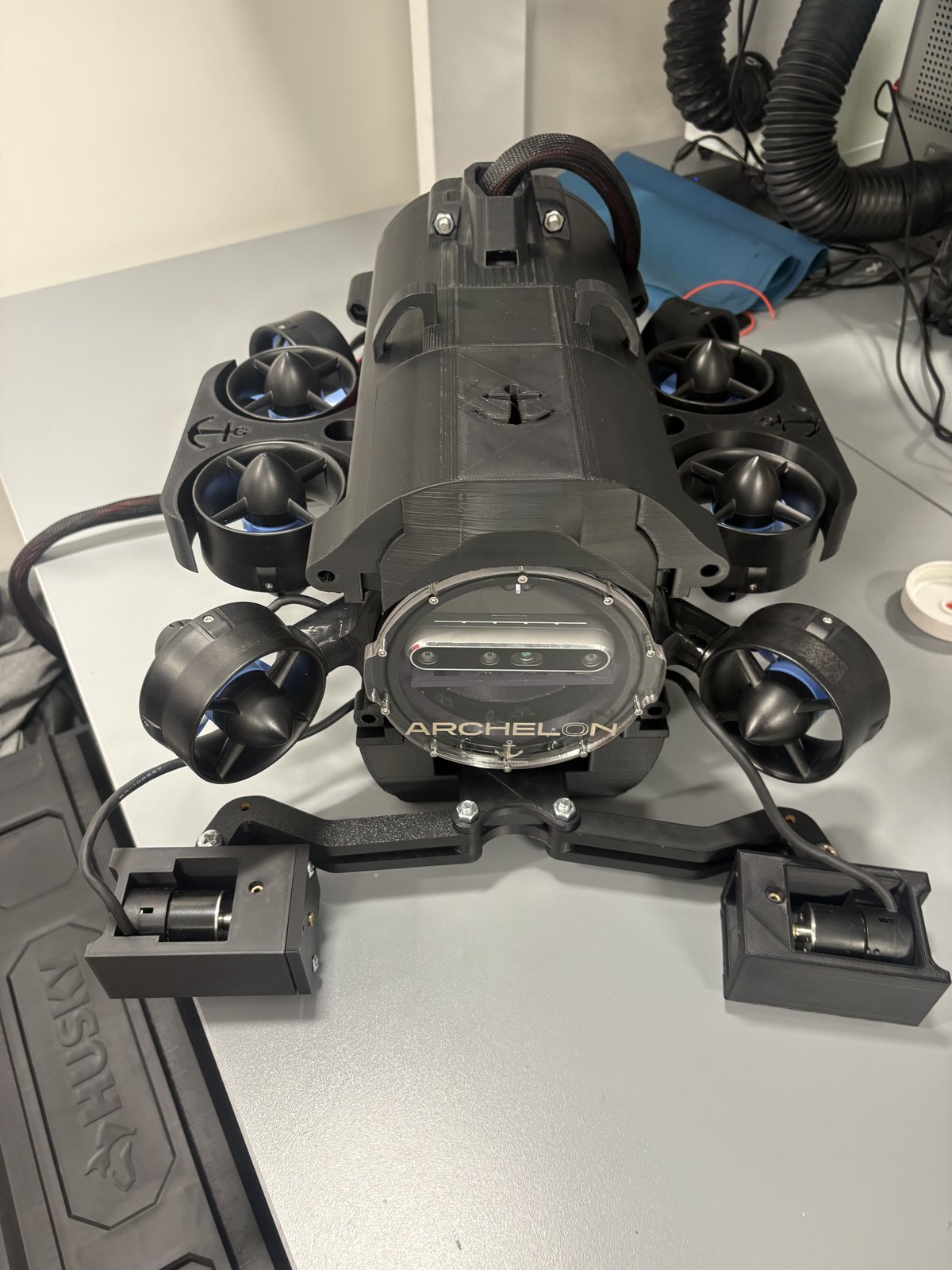
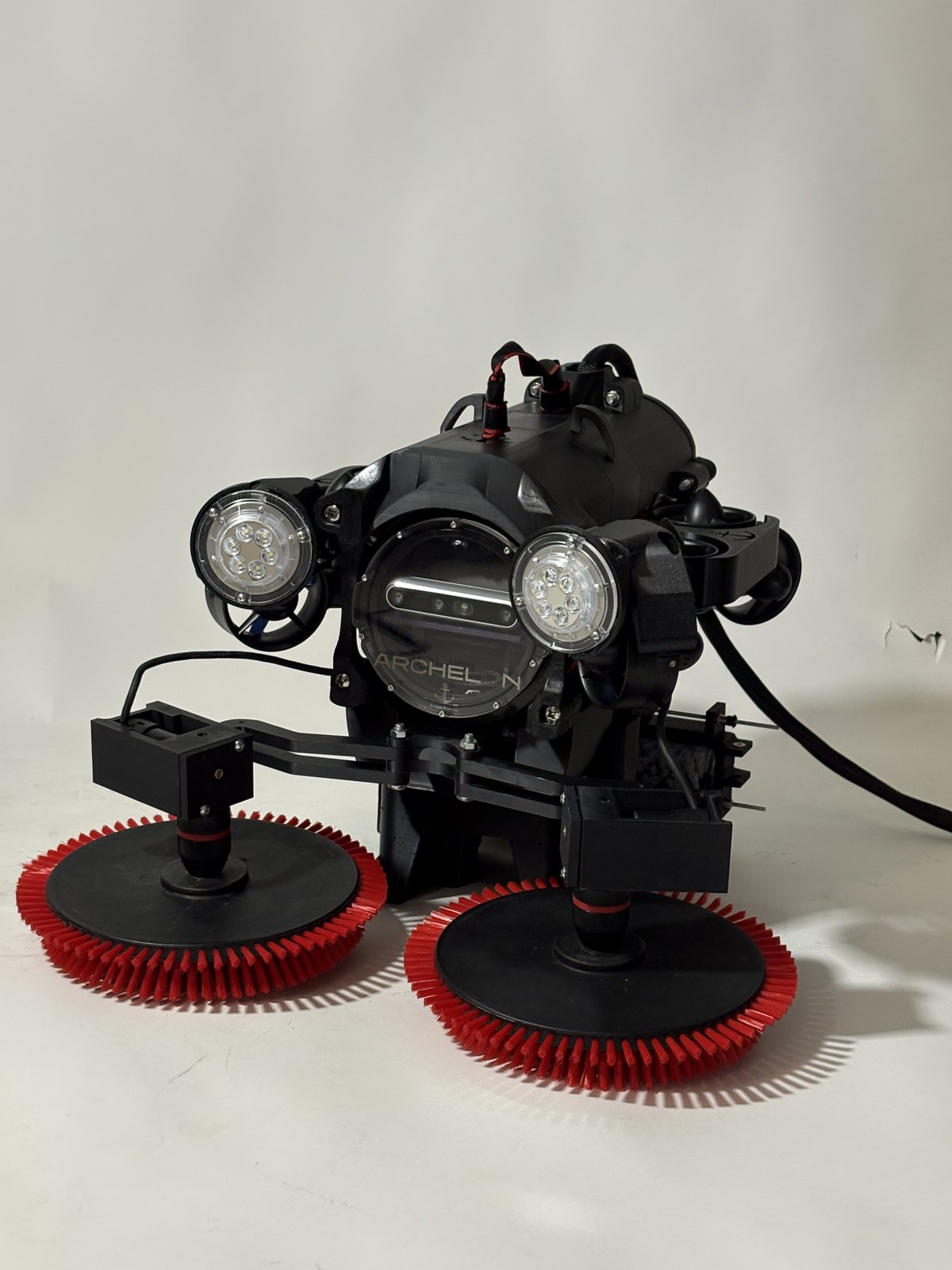
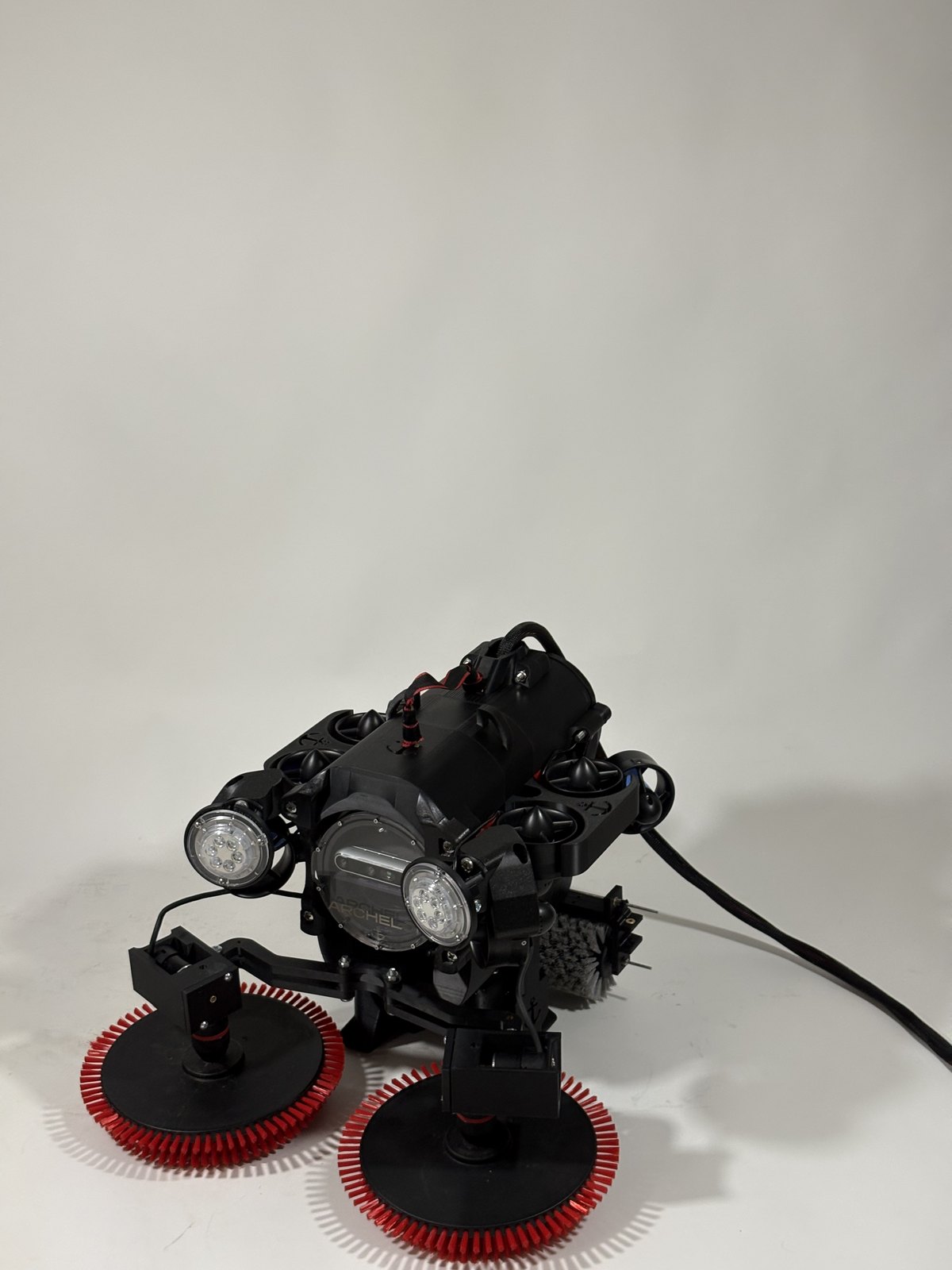
A four-month Northeastern co-op on Archelon, a bespoke
eight-thruster inspection ROV. I led the co-op engineering team reporting to the
CEO and worked across five repositories. The four writeups below are that work,
and each states plainly which parts were mine and which were the team's.
Sensor simulation and IMU characterisation feeding the mapping attempt
Led by others
Factor-graph SLAM back end (senior engineer)
Field record
10 to 15 pool sessions · 3 to 4 open-water deployments, New Hampshire
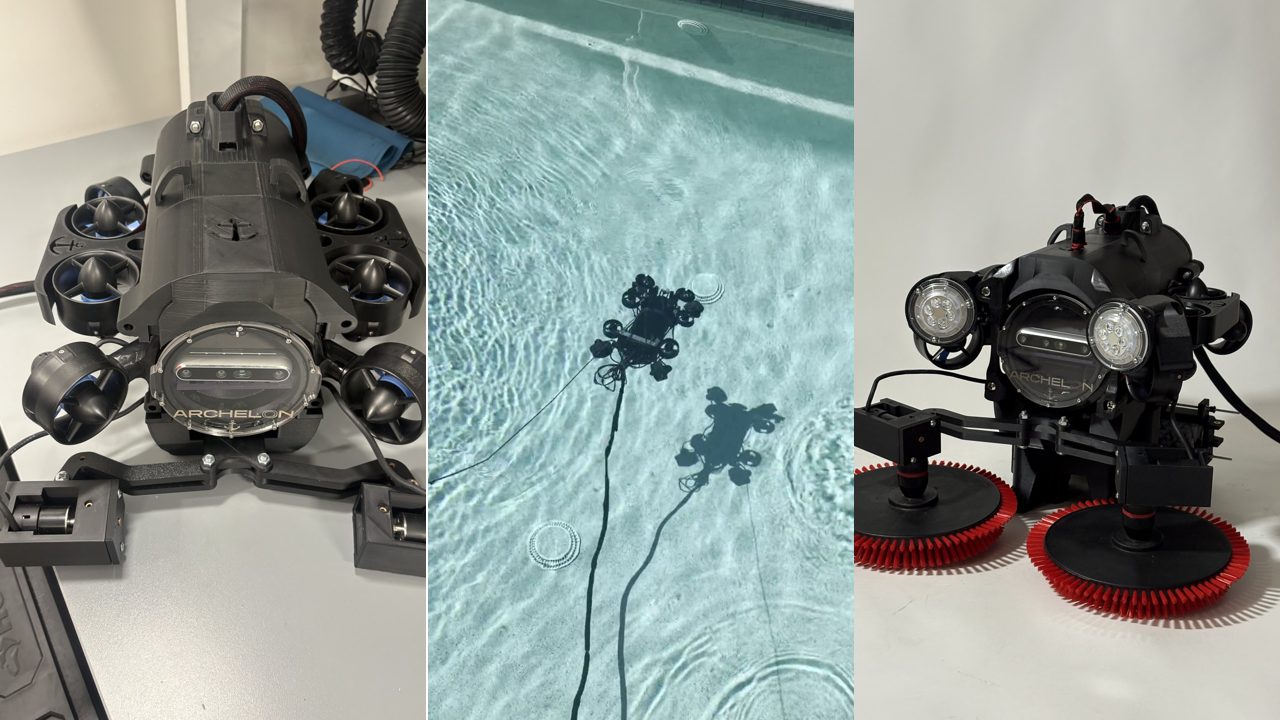
This is the vehicle I worked on during my co-op, in the water, with the sensor stack I
owned. Everything below is footage I took on site. The simulation work further down is
how I got here safely, not a substitute for it.
Pool · sensor stackThe stack I was responsible forPool · FPV pilotingFlying it from the camera feedOpen water · New HampshireOff the boat, into a real lakePool · team testingWet testing with the team
What each clip shows
The stack I was responsible for
Ping360 scanning sonar, three cameras, a VectorNav VN-100, Bar30 depth and the
lighting rig. This is the hardware behind the driver bug where the sonar reported a
wall at 0.3 m while the real wall sat at 4 to 5 m.
T200 thrusters · Ping360 · VN-100 · Bar30
Flying it from the camera feed
Head-mounted display and a hand controller, driving the vehicle on the video feed
rather than by line of sight. The operator interface on the other end of this is
the PyQt UI I built.
MAVLink · joystick piloting · PyQt UI
Off the boat, into a real lake
Surface station on the console, tether over the side, no pool wall to stop the
vehicle. Three to four of these deployments, which is where tether handling and
recovery stop being theoretical.
Surface station · tether ops · recovery
Wet testing with the team
Ten to fifteen pool sessions. This is where a dead depth sensor turned out to be a
missing bit in an I2C probe mask, and where the joystick moved every topic and not
one thruster.
10 to 15 sessions · 7.1 GB analysed
Lake · live detection
The detector running on the vehicle
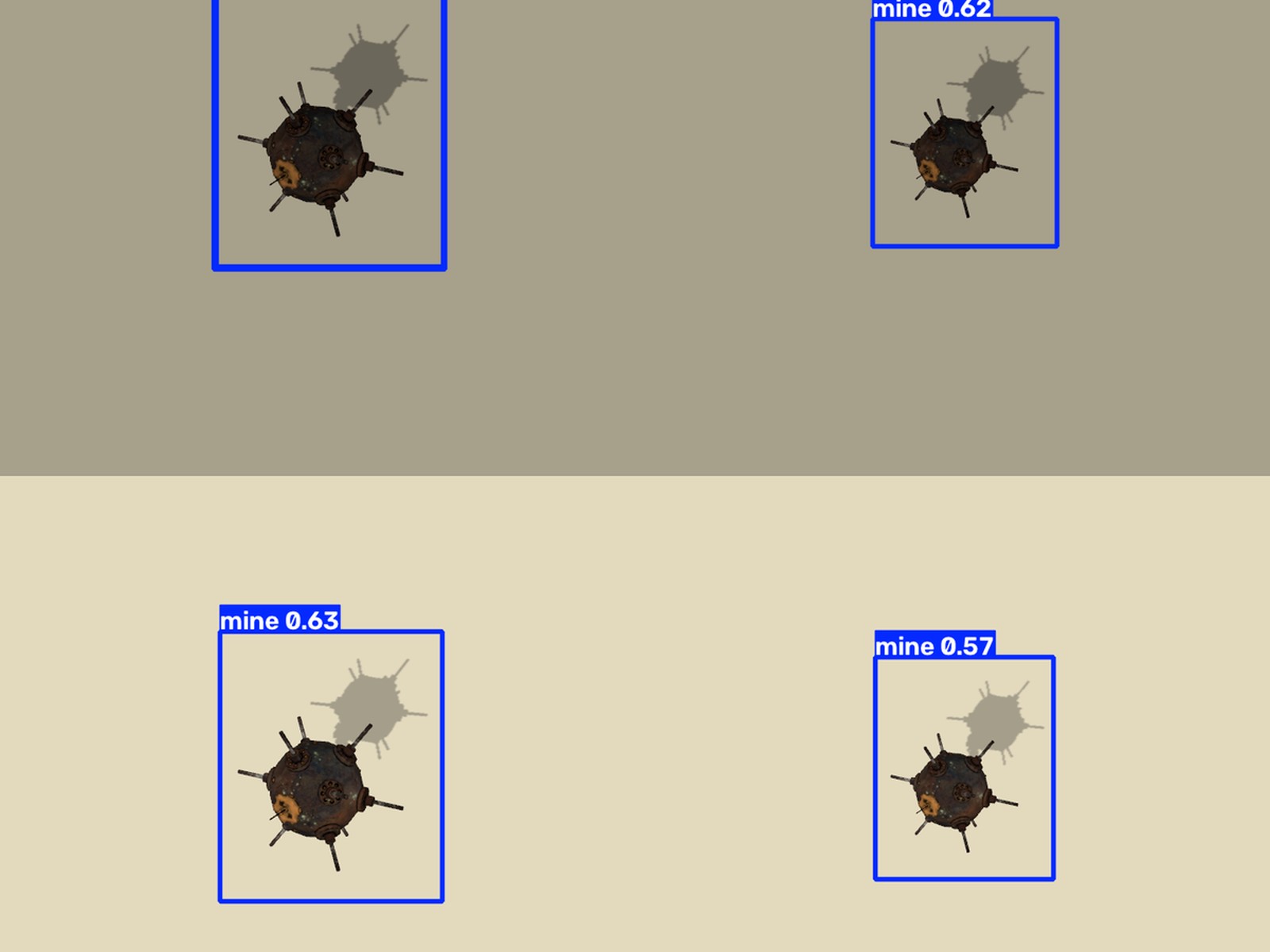
Three cameras at once in murky lake water. The model was trained entirely on a
seeded procedural world that emits its own labels by 3D-to-2D projection, so it
never saw a real frame in training, and reached 0.969 mAP@50.
YOLO11 · synthetic-only training · 3 cameras
Lake · rejecting clutter
Saying no is the hard part
Weeds and silt marked not_mine instead of firing. Getting clutter false
positives from 54% to 0% across three model generations took more work than raising
precision on the targets themselves.
54% → 0% clutter false positives
10 to 15Pool testing
Wet sessions with the vehicle in the water. This is where the depth sensor turned
out to be an I2C bitmask, where the joystick moved every topic and no thruster, and
where the companion computer browned out on rail sag rather than heat. None of those
are findable in a simulator.
3 to 4Open-water deployments
Lake deployments in New Hampshire, taking Archelon from bench bring-up to operation
in real water. Tether handling, surface station, and a vehicle that has to come back.
7.1 GBPool-test data analysed
Logs from those sessions, which is where the Ping360 sonar driver was caught
returning a fake wall at 0.3 m on every beam while the real wall sat at 4 to 5 m.
The bags looked valid, so nothing downstream flagged it.
3 buildsFirmware flash-verified
Flashed and verified on the vehicle before it went in, with a 14-second preflight
GO / NO-GO check gating every dive and a boot service that survives power-on.
321k samplesIMU characterised on
A 30-minute stationary log, Allan variance and Kalibr noise parameters, gyro ARW
0.26 deg/sqrt-hr. Re-recorded after the first attempt turned out to be contaminated
by a nearby speaker coupling into the MEMS accelerometer.
8 + 3Hardware brought up
Eight T200 thrusters plus three M200 auxiliaries, Pixhawk autopilot, Ping360 sonar,
Bar30 depth, VectorNav IMU and a Raspberry Pi 5 companion, on a 50 ft tether.
Every result on this page that is labelled measured was taken off real hardware or a
real dataset. Simulation is how I get there safely; it is not what I do instead.
The footage in this section is mine, taken during these sessions.
Bench, between divesHull-cleaning brushes fittedTether and tracks
The engineering, in four writeups
Co-op 01 / Sensors, perception hardware and the operator UIEvery sensor on the vehicle, and the interface the pilot flies it withmy ownership
Primary engineer, sensor stack and operator interface
This was my primary work: bringing up and owning every sensor the vehicle
carries, and the interface the operator actually uses. Ping360 scanning sonar,
three cameras, the VectorNav VN-100 IMU, depth, and the lighting.
A sensor that returns plausible-looking garbage is worse than one that fails,
because nothing downstream flags it. The Ping360 drew a fake circular wall at
0.3 m on every beam while the real wall sat at 4 to 5 m. The bags looked
valid, correct message counts, correct rates, non-zero ranges, so it cost two
pool sessions before I traced it to first-echo detection in both the Python
and C++ drivers and fixed it with a regression test.
The sensor stack in detail
Sonar. Ping360 mounted vertically, which means roughly 40%
of beams hit the vehicle frame itself and return a tight 0.30 m. That is
only separable when the vehicle is still, so the sector mask is part of the
driver rather than a post-process. Raising the serial link to 2 Mbaud took a
full 360-degree sweep from 23.3 s to 5.9 s.
IMU. I characterised the VN-100 and the autopilot IMU the
estimate depends on: a 30-minute stationary log, 321k samples, Allan
variance and Kalibr noise parameters. Gyro ARW came out at 0.26 deg/sqrt-hr.
The first attempt was contaminated by a nearby speaker coupling into the
MEMS accelerometer, visible only as tonal peaks in the FFT.
Cameras and lights. Three cameras streaming to the topside
station, plus the lighting rig. Underwater the D455 stereo depth returned
only 8 to 40% valid pixels, and flat-port refraction invalidates the factory
calibration outright, so I derived an empirical correction that flattened a
known-flat pool floor from 15 mm to 6 mm median plane residual.
Depth. The Bar30 read nothing however it was wired, because
BARO_PROBE_EXT was a bitmask missing the bit for the MS5837, so
the autopilot never probed the I2C bus for it.
Co-op 02 / Perception & machine learningTraining a detector with no real data to train onsole engineer
Archenaux Robotics · sole engineer, simulation and ML pipeline · 26 commits
Deployed detector on a recorded survey run. Live confidence overlay.
Imagery of the target objects is classified or does not exist. So I generated it.
A seeded procedural world generator emits ground-truth labels by 3D-to-2D projection,
which means every frame is labelled for free and any scene is reproducible from its seed.
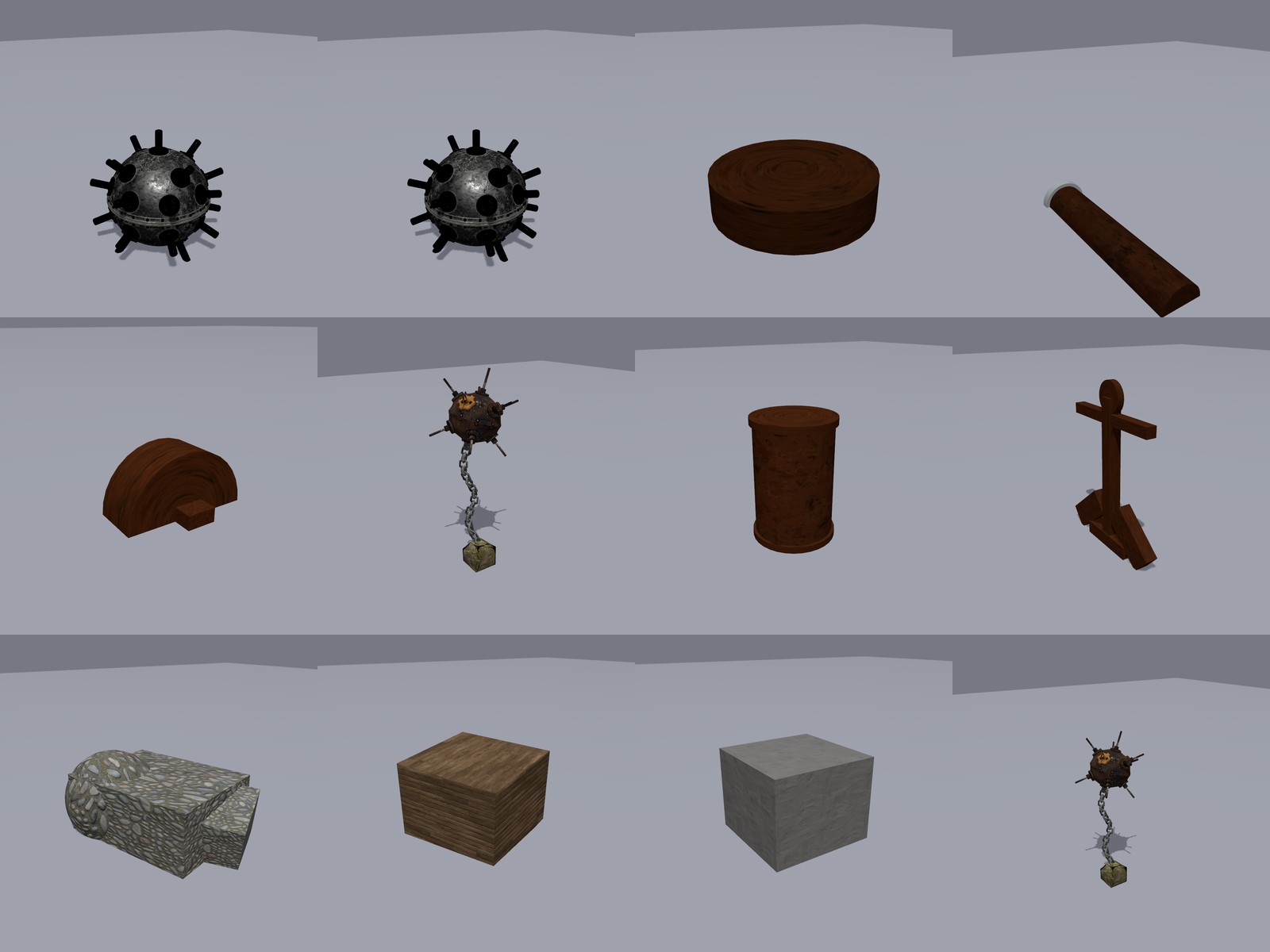
The difficulty is deliberate: seven object types, three turbidity levels, current drift,
marine snow, kelp and seabed distractors that a naive detector calls targets. The
blocking problem was never recall, it was that the model flagged every barrel.
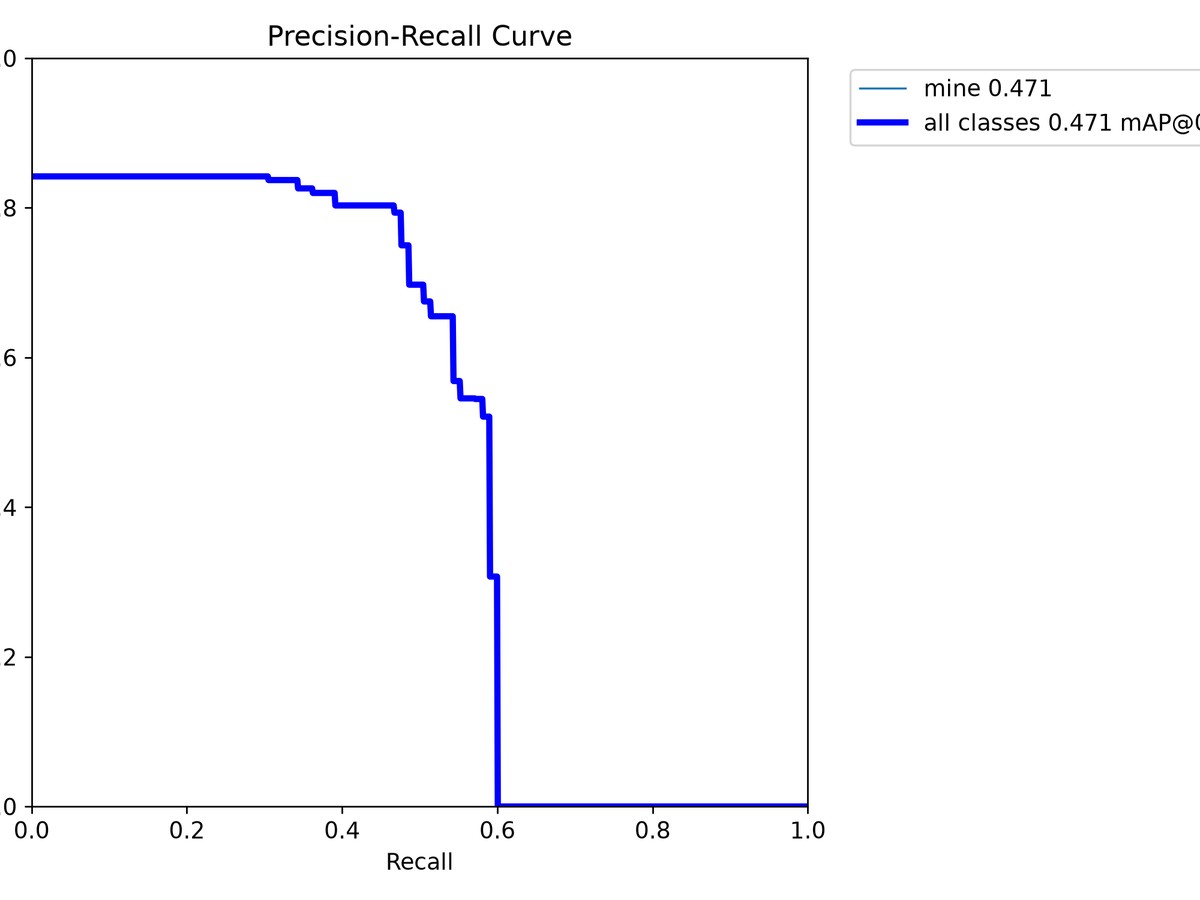
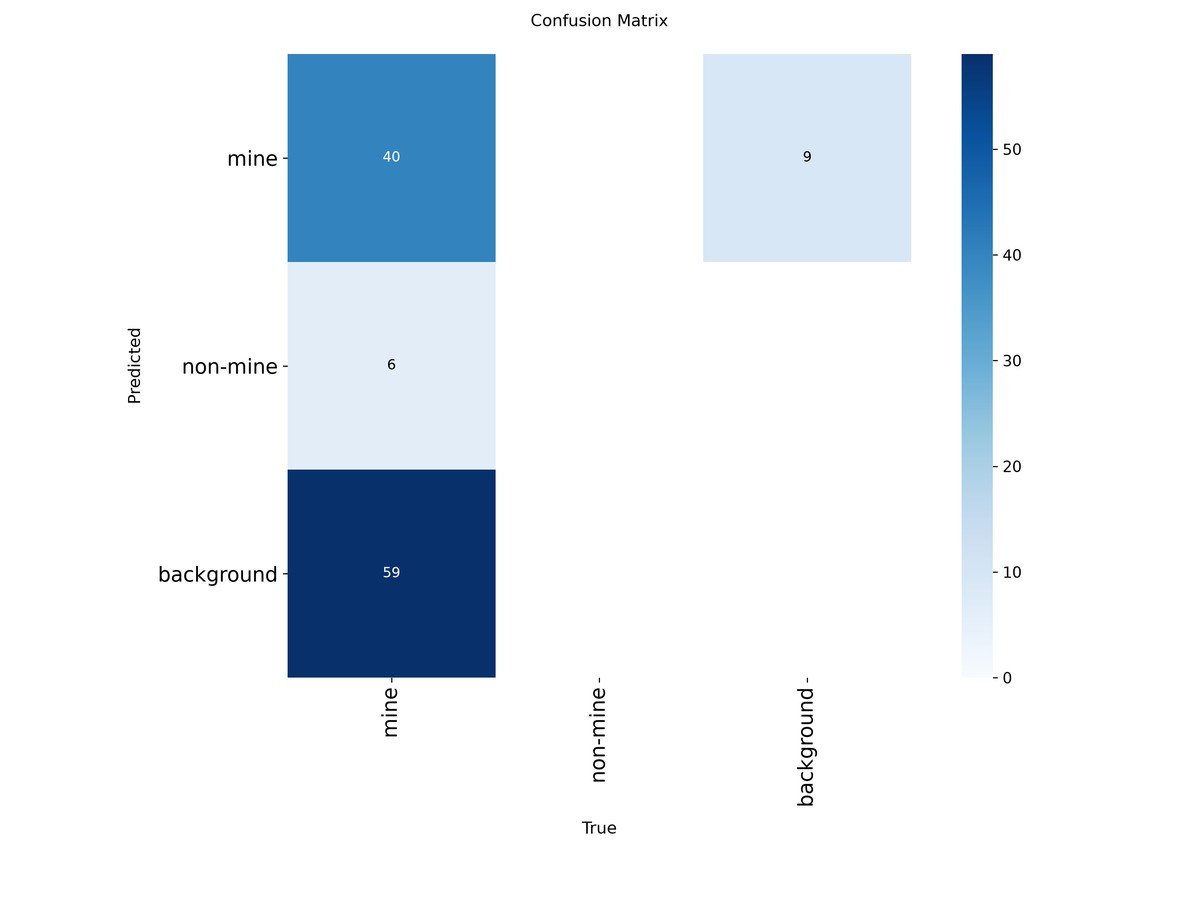
Why I publish the bad number too
The evaluation also showed 0% recall on three object types, because the real-photo
training set contained no flat or torpedo-shaped examples. I would rather publish
that than a clean chart. An unevaluated detector is worse than none, because
someone trusts it.
Archelon runs ArduSub in a vectored six-degree-of-freedom configuration. I own the
runtime that ships to it and I did the sensor bring-up, which is mostly a story about
failures that look like software and are not.
The depth sensor read nothing no matter how it was wired, because
BARO_PROBE_EXT was a bitmask missing the bit for the MS5837, so the
autopilot never probed the I2C bus for it. The joystick moved every topic on the
dashboard and no thrusters, because ArduPilot silently discards RC override from any
system ID other than the one it is told to trust. The companion computer browned out
under load, which turned out to be rail sag down the tether rather than thermal
throttling.
On numbers nobody can trace
None of those are findable in simulation. I wrote the power-budget analysis that
justified swapping the companion computer, and it says plainly which of its figures
are measured and which are estimated, because a number nobody can trace is worse
than no number.
The runtime itself is a containerized stack shipping to the real vehicle: MAVLink
router, MAVROS, cameras, joystick piloting, RViz and QGC as one multi-arch image,
with a 14-second preflight GO / NO-GO check gating every dive and a boot service
that survives power-on.
Co-op 04 / Simulation infrastructureA simulator other engineers can actually runmy ownership
Archenaux Robotics · owner, shared simulation core · 97 commits across two repositories
Autopilot software-in-the-loop wired to Gazebo Harmonic over a JSON physics backend.
A simulator only one engineer can start is not an asset. I own the core the other
projects build on, and most of its value is that it runs on someone else's laptop on
the first try.
Three containers on one network: autopilot software-in-the-loop, physics, and a ground
control station with joystick passthrough, plus a dev container. GPU is optional with
auto-detected vendor overrides, and a browser-based fallback means the interface works
on headless, Wayland and WSL hosts. That last one resolved a display crash blocking a
teammate.
Archelon: an eight-thruster inspection ROV, from bench bring-up to open water
I led the co-op engineering team, owned the sensor stack, the vehicle runtime and the detector, and took the vehicle from the bench into lakes in New Hampshire.
Hackachusetts 2026 · team of 3 · robots, simulation and autopilot loop mine
A drone above the water and an ROV below it, inspecting a real Boston bridge
Real ArduCopter and ArduSub firmware fly a drone and an ROV through an Isaac Sim rebuild of the Charles River Dam crossing. Every waterline defect the drone flags, the ROV dives to inspect.
ROV nav error, GPS off
≤ 0.60 m
points, lidar above + sonar below
4.54 M
flagged defects inspected
4 / 4
Details, my part and the stack
Team of 3 · I built the robots, the simulation, the autopilot loop and ROS 2
The Charles River Dam crossing rebuilt in Isaac Sim. ArduCopter flies the drone, ArduSub flies the ROV.
Built in one day for challenge R6, safer inspection of critical infrastructure. A
Holybro X500 flown by real ArduCopter SITL runs a 37-waypoint mission along the canal
walls and under the deck, where the bridge cuts GPS from 12 satellites to 7. Every
waterline defect it flags becomes a task for a BlueROV2 Heavy on ArduSub, which dives
with GPS off and navigates on a modelled DVL fed into the autopilot's EKF.
Both robots build one model of the structure: 2.96 million lidar points above the
water and 1.58 million sonar points below it. The ROV never drifted more than 60 cm
over a 200 m dive, and 4 of 4 flagged defects were inspected underwater. The demo is a
replay of a recorded 21-topic ROS 2 bag, run live on stage from one Docker launch.
What is modelled and what is real
Real: ArduCopter and ArduSub flight code, MAVLink mission upload, the EKF, ROS 2 Jazzy,
RViz2 and QGroundControl. Modelled: the GPS drop under the deck (the bridge lowers
the satellite count), the Ouster OS0-128 lidar and 130-degree multibeam sonar as ray
casts, murky water as Beer-Lambert attenuation plus silt, and a simulated thermal
camera. Thirteen defects were planted as ground truth, nine above the water and four
below, including a scour pit with exposed timber piles.
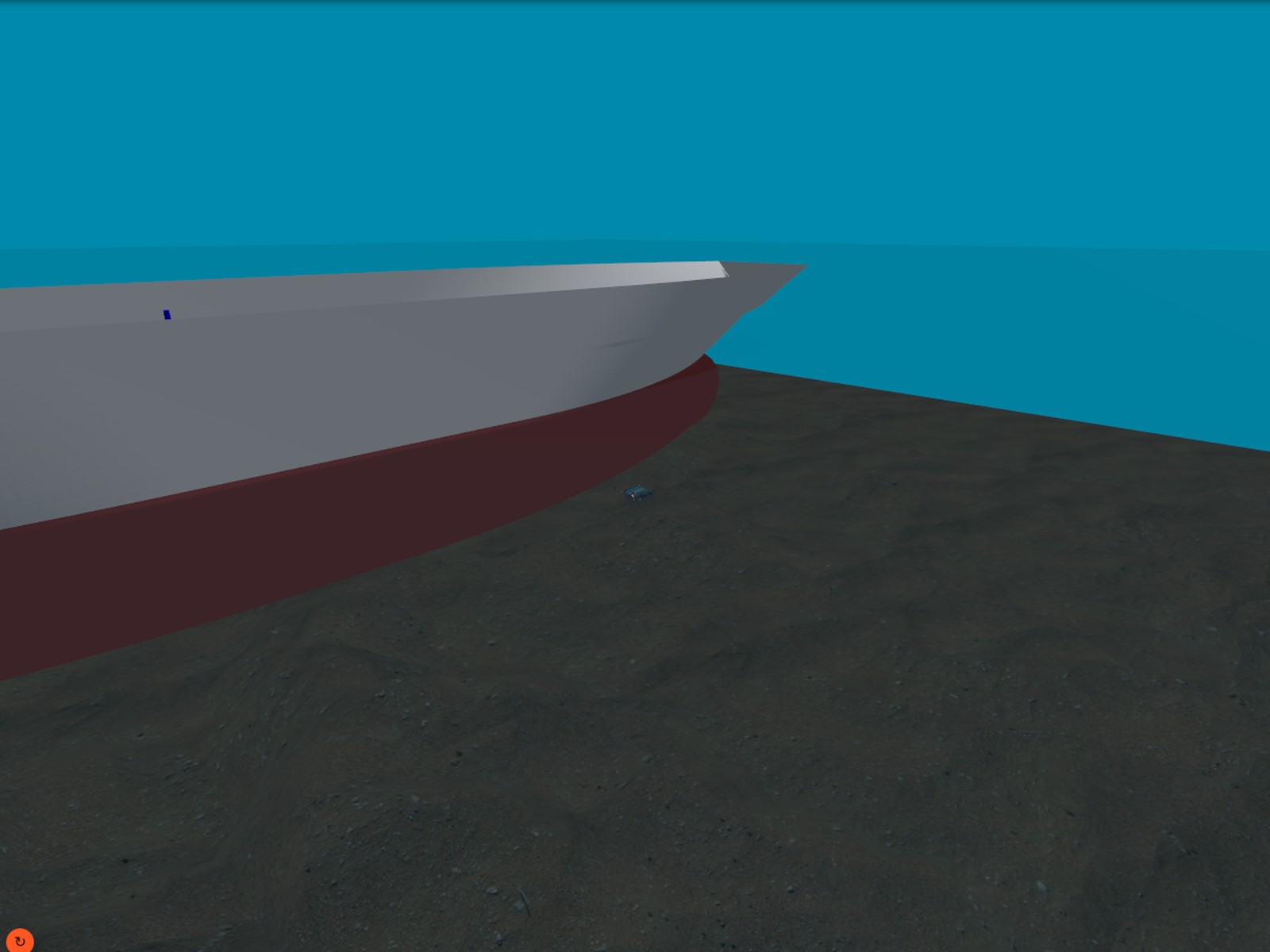
Autonomous harbour inspection · concept for a USV startup
A waterjet boat that patrols a harbour, spots what changed, and docks itself
ArduRover SITL drives a 4.2 m twin-waterjet USV on my own Fossen hydrodynamics and JONSWAP sea, lock-stepped over ArduPilot's JSON backend and path-traced in Isaac Sim.
median cross-track error, after tuning
1.64 → 0.37 m
docking error
0.17 m
collisions
0
Details, my part and the stack
Concept for a USV startup · firmware-in-the-loop simulation and film
ArduRover 4.5 SITL drives the boat; Isaac Sim 6 path-traces the logged run.
A 4.2 m twin-waterjet USV runs an approved patrol route, compares its lidar map with
yesterday's patrol and raises change alerts. On operator approval it stands off a
contact, loiters on its jets, rejoins the route and berths itself on a solar charging
float. The autopilot is the real Pixhawk firmware, ArduRover SITL, lock-stepped to my
own physics over ArduPilot's JSON backend.
The physics is a Fossen 3-DOF manoeuvring model with jet spool-up lag, a reversing
bucket, current and shallow-water drag, on a JONSWAP wind sea plus swell. Heave, pitch
and roll come from the hull sampling that wave surface, and the rendered water uses
the same wave field. Tuning cut median cross-track error from 1.64 m with a 3 m weave
to 0.37 m.
Hyperion · Dell x NVIDIA GB10 · Grok Bot · Wajo x Anthropic
A 20-robot warehouse where AI agents find the fault and get a technician on the phone
Twenty Nova Carters in Isaac Sim. Agents detect faults, re-plan the fleet with Hungarian assignment and, through Fo, place real calls to an on-call technician. Code enforces, the model explains.
simulated deliveries, 3 seeds
27.3 → 42.0
runs replay to identical logs
3 / 3
real phone calls in live runs
10
Details, my part and the stack
Dell x NVIDIA GB10 · Hyperion x Grok Bot · Wajo x Anthropic
Twenty Nova Carters in an Isaac Sim warehouse, streaming live fleet telemetry.
Started at the Dell x NVIDIA GB10 hackathon: a teammate and I built the Isaac Sim warehouse of 20
Nova Carters and shipped the stack as six services in one Docker image on the GB10,
where a local Qwen model on vLLM triages robot faults into tickets. I then added four
agents (surveillance, war room, technician scheduler, Hungarian re-allocation) under
one rule: code enforces, the model explains. Over 3 seeds they raised deliveries from
27.3 to 42.0, and every run replays to an identical event log.
For Wajo x Anthropic, a Claude dispatcher hands a confirmed fault to Fo, which places
real phone calls, calendar invites and emails to an on-call technician while the fleet
re-plans around the repair. Who it may contact is enforced in code: in a live run, when
a technician said to send someone off the list, the agent refused. I also mounted a
Franka arm on all twenty Carters as a mobile-manipulation testbed.
Simulated deliveries
27.3 → 42.0
+54%, 3 seeds, same faults
Replay check
3 / 3
identical event logs
Live dispatch runs
5 runs, 10 calls
real phone calls, simulated robots
Fleet
20 robots
Isaac Sim 6 · Nova Carter · Franka · vLLM · Claude · Docker · NVIDIA GB10 · Hungarian assignment
Solo · YC pitch
Intake-cleaning robot · startup study and pitch film
An underwater robot that clears mussels from power-plant intakes, rendered physically
Path-traced in Isaac Sim with MDL materials and procedural mussel instancers; the water is my own compositor working from depth.
render time per frame, BVH fix
24 → 5.7 s
regulated US intake sites sized
1,065
diver deaths OSHA counted
6 in 13 mo
Details, my part and the stack
Startup study and pitch film · Isaac Sim path tracing + a custom water renderer
Path-traced in Isaac Sim; the water itself is a ray-marched medium composited from depth.
Divers clean zebra and quagga mussels out of power-plant and desalination intakes, and
OSHA counted six suction-related diver deaths in 13 months. I built the case for sending a robot instead, then the film to pitch
it. The robot and intake are rendered with Isaac Sim path tracing, MDL materials and
procedural mussel-clump instancers, writing raw HDR and depth for every frame.
The water is my own compositor working from that depth: absorption, backscatter,
ray-marched god rays and lamp beams, caustics, Snell's window and drifting particles.
Profiling the render found that hiding instances far below the scene bloated the BVH
and made every frame 24 s; sinking them into the wall instead brought it to 5.7 s.
Render time per frame
24 → 5.7 s
BVH fix, GPU-bound
Market sized
1,065 sites
regulated US intakes
Water model
custom, post
Isaac Sim path tracing · USD · MDL · NumPy compositor · Python
03
Simulation range
Twelve robots, captured from simulations I built
Humanoid · MuJoCo
A 67 kg humanoid that walks because a controller says so
What it shows
Unitree H1-2, 51 actuated joints, built from torque control upward in MuJoCo. The measurement that starts everything: hold every joint at its commanded angle, let go, and the pelvis drops from 1.030 m to 0.415 m in six seconds. Angles are not momentum.
Unitree G1 humanoids training in parallel in Isaac Lab. Ablating one reward term at a time over 29 runs: removing the −200 termination penalty collapses learning to 4.2% of baseline episode length while the reward climbs, because falling becomes free.
A Unitree Go2 under a trained policy, blind versus perceptive on the same terrain. Tracking improves from 64.6% to 69.9% once the policy can feel the ground. Gait is verified on contact timing and foot clearance, never on the reward curve.
Isaac Lab · PPO · MuJoCo · Python
Quadruped · navigation
Velocity commands from a planned path
What it shows
The layer between a navigation stack and a learned gait: a path becomes body-frame velocity commands the policy can track, with footstep planning over an elevation map built from a depth camera.
Isaac Lab · elevation mapping · footstep planning
Manipulator · SO-101
Pick and place, with an evaluation harness that argues back
What it shows
MuJoCo pick-and-place on the SO-101 arm, tested against its own failure modes: a contact gate that rejects a faked grasp, and a harness that fails when the evaluation is wrong rather than when the robot is.
MuJoCo · SO-101 · evaluation harness · Python
Manipulator · parallel RL
Many arms, one physics step
What it shows
Franka reach environments running vectorized on the GPU. Same principle as the humanoid and quadruped training: every robot advances inside a single solver call, which is what makes RL tractable on laptop-class hardware.
Isaac Lab · vectorized envs · CUDA · PyTorch
Manipulator · VLA
Language-conditioned pick and place
What it shows
A 7-DoF arm driven by a vision-language-action policy: an instruction in, a joint trajectory out. Built so every layer between the camera and the actuator is inspectable rather than a black box.
Isaac Sim · VLA policy · ROS 2 · PyTorch
Surgical · RCM
Precision manipulation under constraint
What it shows
Laparoscopic arm simulation: remote-centre-of-motion constraint solving, damped least-squares IK near singularities, and the millimetre tolerances that make a general-purpose manipulator stack inadequate.
Isaac Sim · RCM · DLS IK · ROS 2
AMR · ground robot
Scan matching, built rather than imported
What it shows
A ground robot mapping a warehouse with 2D LiDAR: ICP front end, mapper, loop closure and pose graph written from scratch. Point-to-line registration lands at 2.3 mm against 8.1 mm for point-to-point on the same run.
ROS 2 · ICP · pose graph · occupancy mapping
LiDAR SLAM
Measuring where SLAM fails, not just where it works
What it shows
A wall is degenerate at 3747 against 1.9 on open floor, so the same scan matcher that is excellent in a corridor is near-useless facing a flat surface. Every figure is reproducible from the repository, including the inconvenient ones.
ROS 2 · scan matching · loop closure · Python
Underwater · detection
Detection with no real training data
What it shows
A seeded procedural world emits its own ground truth by 3D-to-2D projection, so every frame is labelled for free and any scene is reproducible from its seed. Clutter false positives went from 54% to zero across three model generations.
YOLO11 · PyTorch · Gazebo · OpenCV
Marine · Isaac Sim
A second physics backend that argues with the first
What it shows
The vehicle ported to Isaac Sim as a second physics engine: animated water with underwater rendering, hydrodynamics covering buoyancy, damping and added mass, and a bridge closing the control loop against Isaac physics.
Isaac Sim · RTX offscreen · ROS 2 · pytest
04
Experience, awards & papers
Open to 2027 new-grad roles, from May 2027
Jun 2026, Sep 2026
Robotics Engineer, Co-op, technical lead
Archenaux Robotics · Boston, MA
Led the co-op engineering team reporting to the CEO across five repositories. I
owned the containerized vehicle runtime, the learned detection pipeline, the shared
simulation core, and the sensor bring-up that took Archelon from bench to open
water. On the mapping stack I contributed the sensor simulation and IMU
characterisation; a senior engineer led the factor-graph back end.
Oct 2022, Aug 2024
Vice-President, Robotics Team
Vellore Institute of Technology · India
Co-led a team of 80 designing and manufacturing FPV drones, autonomous drones,
battle bots and AMRs. Mentored students in ROS 2, Gazebo and OpenCV.
Jan 2024, Jun 2024
Robotics Intern
Mafkin Robotics · Chennai, India
Autonomous ship-hull cleaning robot for biofouling, which increases drag by up to
40%. Implemented real-time 3D SLAM in Gazebo using RTAB-Map.
Sep 2023, Dec 2023
Research Intern
Universiti Teknologi Petronas · Perak, Malaysia
Autonomous drone and AMR technologies for surveillance and navigation. SLAM and
navigation in Gazebo with RealSense D455i, RPLIDAR, wheel encoders and IMUs,
integrated through ROS 2.
Sep 2025, Apr 2027
M.S. Robotics
Northeastern University · Boston, MA
Mobile Robotics · Robot Sensing and Navigation · Control Systems
Sep 2021, Apr 2025
B.Tech Mechatronics, Robotics and Automation
Vellore Institute of Technology · Chennai, India
Industrial Robotics · Control Systems · Kinematics and Dynamics · Mechatronics System Design
Written and produced end to end. Narrated courses covering humanoid balance, quadruped RL in Isaac Lab, LiDAR SLAM, visual SLAM/VIO, manipulation, surgical robotics, autonomous driving and drones. Most clips at the top of this page are captured from that work.
Undergraduate capstone: an autonomous mobile robot for precision agriculture using ROS 2, SLAM Toolbox and Nav2, with a CoreXY manipulator for seed placement.
ROS 2 · Nav2 · SLAM Toolbox · CoreXY
06
About
I am an M.S. Robotics student at Northeastern, graduating April 2027, coming off a
co-op where I led the engineering team on an eight-thruster inspection vehicle.
My work sits where perception hardware meets software. On the vehicle I owned the
sensor stack, sonar, cameras, IMU, depth and lighting, plus the operator interface
and the containerized runtime that ships to it. I also trained a detector on a
world I generated, because imagery of the real targets does not exist.
Simulation is how I get there safely, not what I do instead. Every number on this
page that says measured was taken off real hardware or a real dataset, and the
bring-up behind it meant I2C bitmasks, refraction calibration and a power rail that
could not hold under load. I publish the attempts that did not work alongside the
ones that did, because an unevaluated result is worse than none.
Outside the co-op I write and produce robotics courses, which is where the quadruped,
manipulator and parallel-training clips above come from. Teaching a thing end to end
is the fastest way I have found to learn where my own understanding is thin.
 Real hardware · co-op lead